
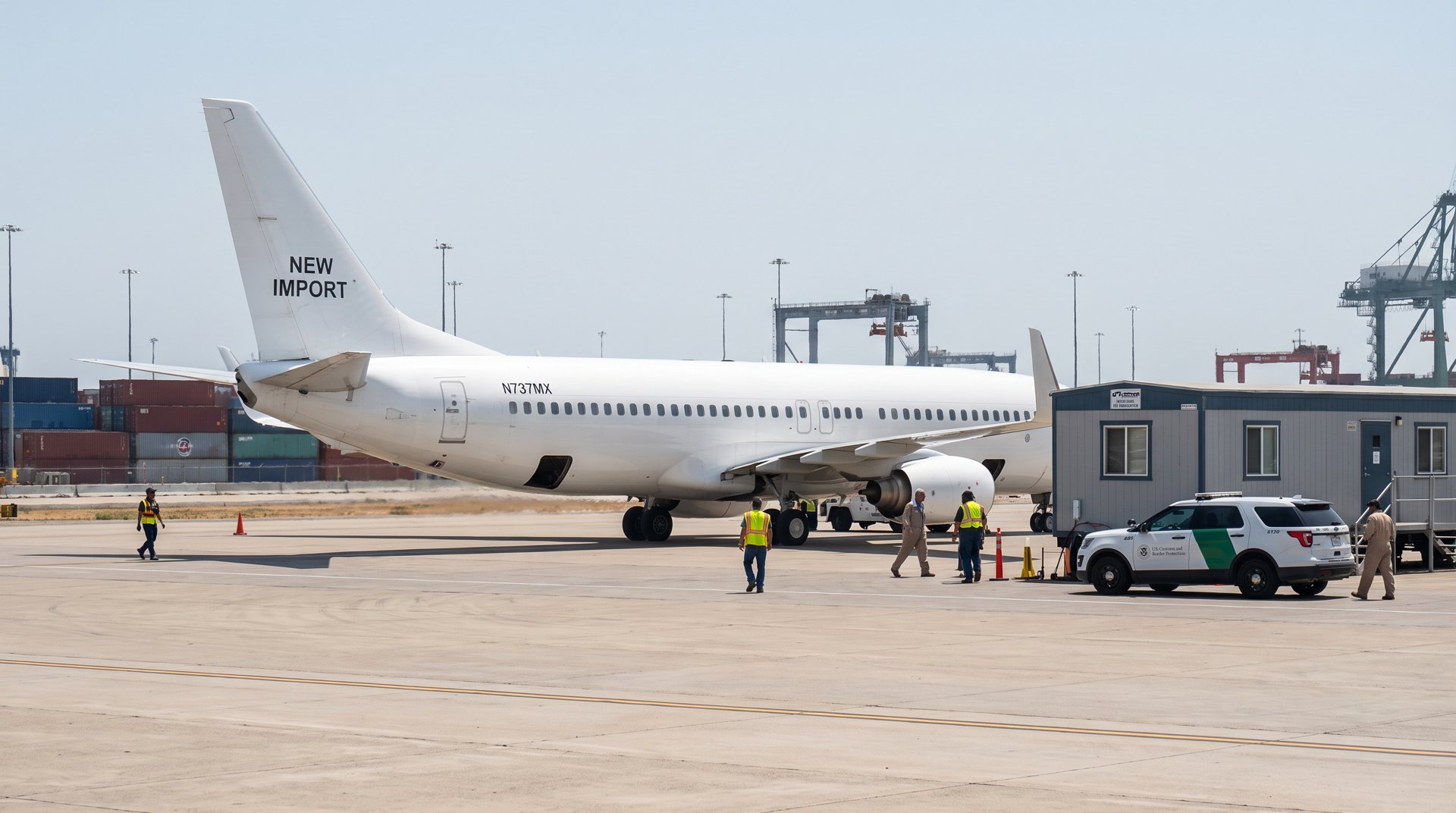
What is involved in importing an aircraft into the United States?
Importing an aircraft into the United States means filing a customs entry, not simply landing. The entry ties the aircraft to a declared value, a classification and an importer of record, supported by the bill of sale and the aircraft documents. The arrival airport has to be able to process the aircraft, Landing Rights must be approved in advance where the airport requires them, and an eAPIS manifest is filed for the inbound crew. Most delays come from choosing the arrival airport before checking what it can clear.
Key takeaways
- The entry, not the landing, is the import
- Transaction documents and aircraft documents have to agree before arrival
- Arrival port capability and Landing Rights drive the timeline
- An importer of record can be someone other than the owner
What makes an aircraft arrival a US import?
An aircraft crossing into United States airspace is a flight. An aircraft entering United States commerce is an import, and that is a customs filing with a declared value, a classification and a named importer of record behind it.
Because we are bonded with CBP, we file that entry directly rather than passing the file to an outside broker. That matters mostly for speed: the person who knows the arrival time is the person filing the paperwork.
What must be ready before an imported aircraft arrives?
The expensive discoveries are documentary. A bill of sale that does not match the airframe in the registration file, or a value that cannot be supported, becomes a problem on the ramp rather than a problem in an inbox.
| Item | Who owns it | When it is needed |
|---|---|---|
| Bill of sale and value support | Buyer and importer of record | Before the entry is filed |
| Registration and airworthiness documents | Owner or lessor | Before departure to the US |
| Arrival airport able to process the aircraft | Operator and filer | When the route is planned |
| Landing Rights approval (if required) | Operator, approved by CBP | Before the arrival is confirmed |
| eAPIS crew manifest | Operator | Before departure of the inbound leg |
- Bill of sale and purchase documentation supporting the declared value
- Registration and airworthiness documents for the airframe
- An arrival airport that can process the aircraft on the day it arrives
- Landing Rights approval where the arrival airport requires it
- eAPIS manifest for the inbound crew, filed before departure
What slows down a US aircraft import?
The filing itself is not the slow part. Port capability and Landing Rights are, because both depend on a third party agreeing to receive your aircraft at a particular time. Start those conversations while the arrival date is still movable.
If the aircraft is arriving for maintenance, storage or resale rather than to be placed straight into service, say so early. What the aircraft is here to do affects how the entry should be handled.
Can the aircraft buyer stay private on a US import?
Entry records are one of the ways a transaction becomes visible earlier than the parties intended. Where that matters, or where a foreign buyer has no US entity to file under, we can act as importer of record so our name appears on the entry instead of the owner's.
Common questions
Last reviewed September 9, 2026 by the Super Universal operations desk.