
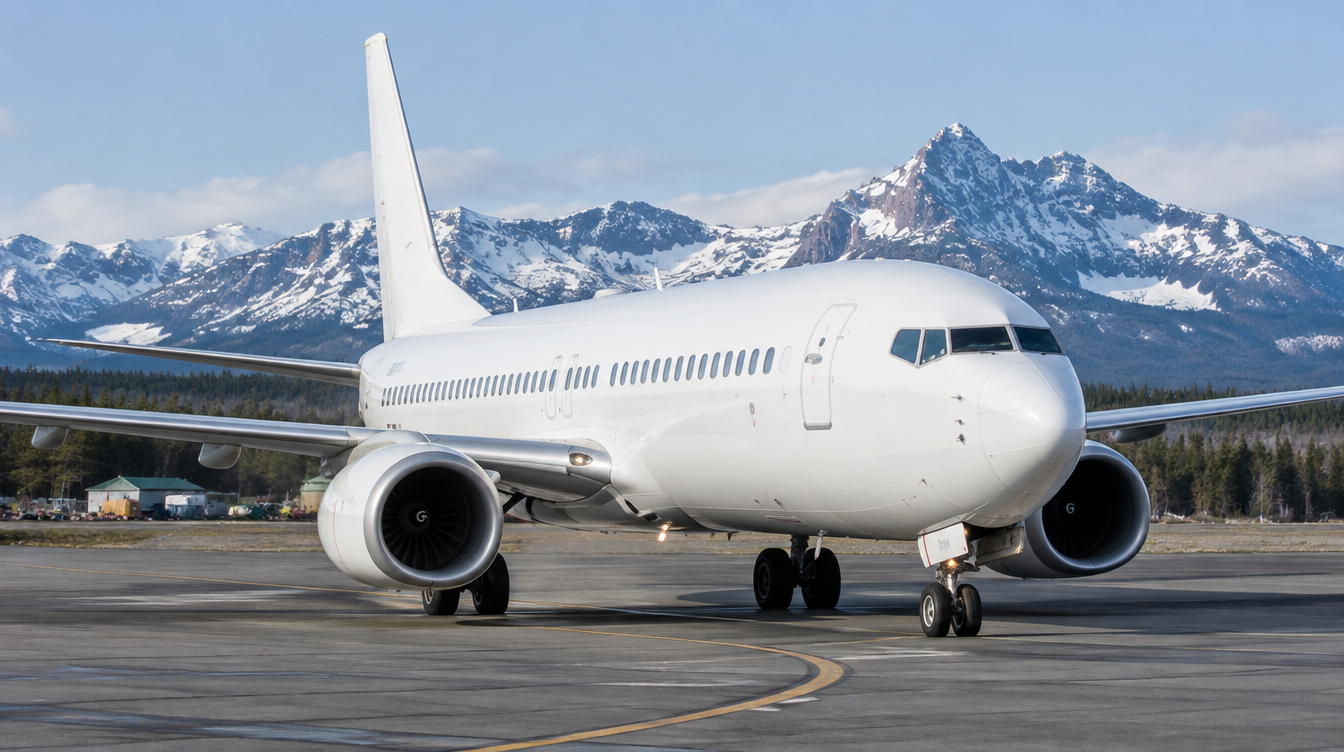
How do you ferry a narrowbody aircraft across the Pacific?
A narrowbody or regional aircraft normally crosses the Pacific in stages rather than flying a direct ocean leg. The route is built around the aircraft's usable range, live alternates, fuel availability, permits and seasonal weather, with Alaska serving as the North American gateway. Each technical stop must be confirmed before departure because a forecast change or closed alternate can reshape the entire crossing.
Key takeaways
- The safest route is chosen from usable alternates and aircraft capability, not the shortest line on a map
- Permits, handling and fuel must be confirmed for every technical stop before the aircraft leaves
- North Pacific weather can move a departure by days, so the schedule needs a realistic hold allowance
- Customs, eAPIS and arrival approval must stay aligned with every crew, airport and timing change
Start with the aircraft's real crossing capability
The route study starts with the aircraft as it will actually depart: configuration, approved fuel capacity, operating weight, serviceable navigation and communications equipment, and any restrictions attached to its airworthiness status. Published maximum range is not a planning number for a ferry crossing.
A Boeing 737, Q400 or regional jet may cover the Pacific safely through a chain of technical stops, but each type produces a different set of workable legs. Winds, temperature, reserve policy and the distance to a genuinely usable alternate decide whether a leg remains available on the day.
Why Alaska is the North American gateway
Anchorage is the natural pivot between Asia Pacific and the lower forty eight. It combines long runways, established international handling, maintenance support, fuel, customs capability and practical crew rest. That makes it more than a fuel stop: it is the point where the oceanic crossing becomes a continental movement.
The final stop chain depends on origin, aircraft range, current airspace access and operating approvals. We validate each airport and alternate for the specific movement rather than presenting one historic routing as universally available.
Weather and alternates control the departure date
The North Pacific combines fast-moving low pressure systems, strong winds, icing, low ceilings and limited alternates. A departure window that looks acceptable three days out can close when the terminal forecast changes at one remote stop.
A credible schedule therefore includes weather hold time and a decision point before crew positioning. Pressing ahead to protect a promised arrival date can strand the aircraft and crew at a location with fewer options and higher costs.
- Review winds and fuel margins for every leg, not only the longest sector
- Confirm runway condition, de-icing and operating hours at planned stops and alternates
- Carry a practical recovery plan for a diversion or multi-day weather hold
Permits, handling and fuel form one critical path
Overflight permissions, landing permits, slots, ground handling and fuel releases need to describe the same aircraft, crew, route and schedule. A registration change, delayed departure or substitute crew member can force more than one item to be revised.
Remote fuel should be treated as confirmed only when the supplier, payment method, uplift volume and operating window are all accepted. The same discipline applies to towing, stairs, start support and de-icing equipment for an aircraft that may not match the station's normal traffic.
Crew duty needs room for an oceanic disruption
A multi-day crossing is planned as a sequence of legal duties with rest protected at each stage. Crew positioning before the first flight and ground delays after arrival both consume duty time, so an itinerary that works only when every sector runs exactly on time is not a workable itinerary.
Using pilots current on the aircraft type and familiar with remote ferry operations reduces avoidable decisions under pressure. It also gives the owner one operating team that can explain changes, costs and arrival timing throughout the movement.
Border filings must follow the live movement
A US arrival requires the crew manifest, arrival coordination and any aircraft import entry to match the aircraft that actually arrives. If the crew, ETA or port changes, the border filings need to change with them rather than being left on the original schedule.
For an aircraft entering the United States after a sale or lease transition, customs planning should begin with the ferry plan. Importer-of-record responsibility, valuation documents, CBP bonding and Landing Rights can affect which arrival airport is practical and when the aircraft can be released onward.
What to provide for a transpacific ferry quote
A useful quote starts with the registration, aircraft type and serial number, current location, destination, airworthiness status, target window and expected transaction structure. Recent maintenance status, available fuel capacity and known equipment limitations make the first route study much more accurate.
Super Universal prices the movement as one managed operation, including crew, permits, fuel planning, handling and border coordination. Where a route assumption is still uncertain, we identify it rather than hiding it inside a provisional number.
Common questions
Last reviewed September 29, 2026 by the Super Universal operations desk.